Vail on Foot: A Chairlift Is Not a Pedestrian Shortcut
At Vail, the type of lift matters to a winter foot passenger. The resort distinguishes gondola access to pedestrian areas from chairlift use and directs visitors to the relevant mapped options. Read that distinction before selecting a mountain destination simply because a chairlift appears to reach it.
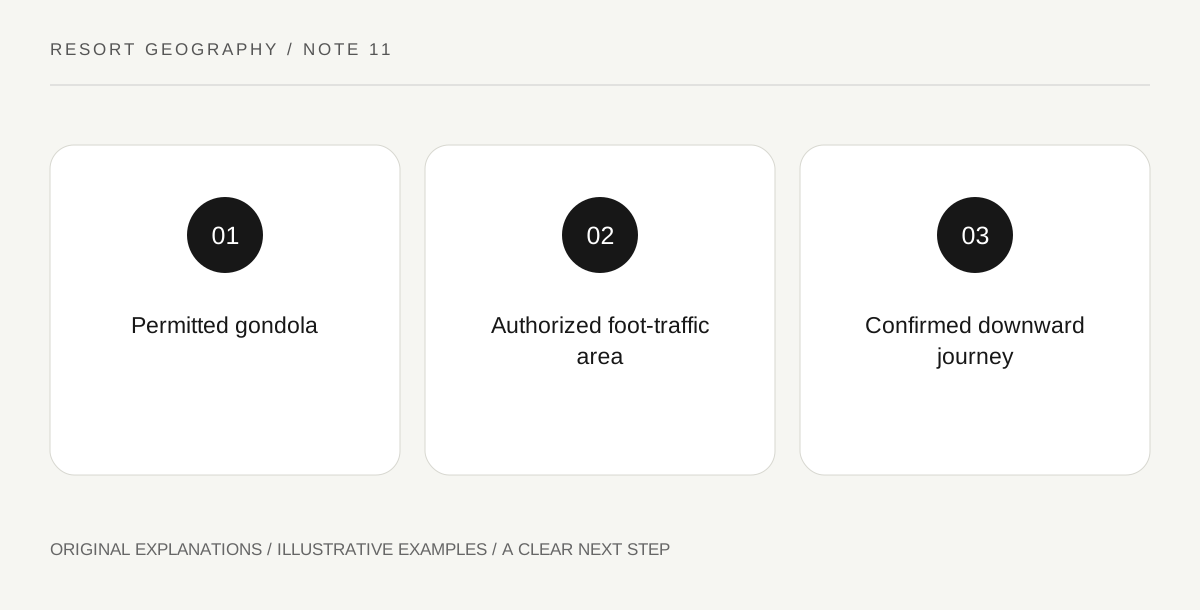
Original explanatory diagram. Read the full method and limitations below.
Begin with the operator’s foot-traffic rule
Vail’s lift-safety information says winter visitors exploring mountain areas accessible to foot traffic need to use a gondola. It directs readers to the trail map for suitable options. That is more specific than the general idea that all lifts carry people. A chairlift line on the map does not establish a permitted pedestrian journey. If a destination is important, ask guest services whether it has an authorized foot-passenger route for the actual date and how that route works in both directions. A ticket alone does not resolve the physical and operational access question.
Separate the cabin journey from the destination area
Even when a gondola accepts a foot passenger, identify what the person may do at the destination. A mountain restaurant, viewing area and ski trail are not interchangeable pedestrian spaces. Ask where foot traffic is authorized and whether the chosen activity can be reached without crossing or following ski terrain. If mobility equipment is involved, explain the exact device and ask about the complete route, including station access and destination surfaces. A broad statement that gondolas can support some mobility devices should not be converted into a guarantee for every cabin, route or winter surface at every moment.
Ask about the return before boarding
Confirm the appropriate downward journey and its current operating window before going up. Do not wait until the end of a meal or activity to discover that the assumed return is different from the arrival. Follow lift staff and posted instructions rather than trying to substitute an unfamiliar chairlift when a gondola option is unavailable. Vail’s information explains that closures can arise from maintenance or conditions not obvious to the passenger. A calm-looking base does not authorize you to override an operator’s closure. If the planned mountain access cannot be confirmed, choose an independently reachable alternative at the base.
Make a destination card with access boundaries
Write the permitted gondola, the confirmed destination and the return instruction on a compact note, then add the specific activity booking. Keep the note descriptive rather than treating it as a permanent authorization. It must be checked against that day’s signs and staff direction. If meeting skiers, ensure the agreed place is one the pedestrian can actually reach and leave. The skier’s familiarity with another lift is not a substitute for permission for a person on foot. This simple separation between lift type, authorized area and return prevents a scenic plan from depending on a route drawn for a different kind of user.
Illustrative restaurant enquiry
A non-skier finds a mountain venue on a Vail map and sees a nearby chairlift. Before booking, the visitor asks guest services for the authorized gondola journey, foot-access boundary and return arrangement. If those cannot support the visit, the meal moves to a base location. The example clarifies lift-type logic without promising access to an unspecified venue.
Practical checks
Optional checkboxes save only in this browser.
Questions that come up
Can a foot passenger use any chairlift shown on the map?
No such general permission follows from the map. Vail’s winter guidance directs foot passengers to gondolas serving appropriate areas. Confirm the actual journey with the operator.
Does gondola access mean the whole surrounding mountain is walkable?
No. Establish the authorized pedestrian area and destination route. Ski terrain and permitted foot access are different categories, even when reached from the same station.
References and scope
These sources support the factual background. Examples and exercises are original illustrative teaching material. References do not imply endorsement.
- Vail: lift safety — Pedestrian gondola access and operator authority over closures.